32 Fine Motor Activities for Toddlers
Helping your toddler develop fine motor skills might sound like a challenge, but don’t stress — it’s actually easier (and more fun) than you think. With the right activities, you can support their development through simple, hands-on play they’ll love.
From playdough squishing and bead threading to spoon scooping and sticker peeling, these activities make learning feel like a game — all while building coordination, grip strength, and independence.
So grab some craft supplies, clear a tiny space, and get ready to play.
Now let’s dive right into these 32 fun fine motor activities for toddlers!
Top Fine Motor Activities for Toddlers
Playdough rolling & pinching
Playdough is one of those things that works for toddlers.
Rolling it into little balls, flattening it with their palms, or pinching off tiny bits—each move strengthens their fingers and builds control without them even noticing.
You don’t need fancy tools either—just a clean surface and maybe a butter knife or cookie cutter.
Show them how to make snakes or “pancakes,” and they’ll start coming up with their own shapes. It’s also great for quiet time when you need to keep their hands busy.
And yeah, they might sneak a taste now and then, but that’s part of the toddler experience, right? Just go with it—it’s messy, simple, and super good for their little hands.
Pom-pom scooping with spoons or tongs
This one’s ridiculously easy to set up, and toddlers love it. Just grab a handful of pom-poms, toss ’em in a bowl, and hand over a spoon or kid-safe tongs.
The goal? Move those fuzzy little things to another bowl—one at a time. Sounds simple, but it’s actually doing a lot: building hand strength, focus, and coordination.
You’ll probably see them miss a few or just use their hands (because toddlers), but that’s totally fine. It’s about the effort, not perfection.
Try using different-sized pom-poms or tools to switch things up. And if one ends up in their mouth? Welcome to toddlerhood.
Sensory bins with rice, beans, or sand
There’s something about sinking tiny hands into a bin of rice or beans that toddlers can’t resist. The texture grabs their attention right away, and suddenly they’re scooping, pouring, and dumping like it’s the best game ever. All that play is secretly building grip strength, finger control, and focus. You don’t need anything fancy—a shallow tub and some cups or spoons will do the trick. Want to keep it interesting? Hide little toys inside for them to dig out like treasure. Yeah, some of it will spill on the floor, but that’s part of the fun. It’s cheap, simple, and always a hit with little ones.
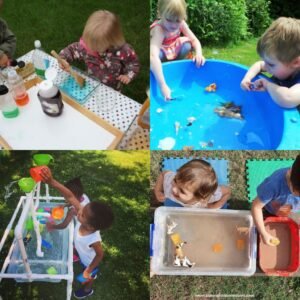
Water play with pouring cups
Toddlers and water—it’s like magnets. Give them a few plastic cups, a small pitcher, maybe a funnel, and they’ll stay busy. The idea is simple: pour water from one container to another. Sounds basic, but it’s teaching control, grip, and focus all at once. Some kids go slow and careful, others splash like crazy—both ways work. You can add food coloring drops to make it more fun, or toss in little floating toys for scooping. Yeah, the floor might get wet, but throw down a towel and call it part of the game. It’s one of those activities where they’re learning skills but think they’re just playing with water.
Shaving cream finger painting
Toddlers light up when they see a pile of shaving cream spread on the table. The soft, foamy feel makes them want to touch, smear, and draw right away. As they swirl with fingers, they’re practicing control and hand strength without even realizing. You don’t need much—just a flat surface and some cheap shaving cream. Add food coloring drops if you want a burst of color, or keep it plain for easy cleanup. Some kids will draw shapes, others just make a mess, and both are fine. The best part is wiping it off after, which feels like another game. It’s messy, quick, and perfect for building little hands.
Peeling stickers
There’s something about stickers that toddlers just can’t resist. The challenge of peeling them off the sheet is tricky enough to keep them focused, but not so hard that they give up. Each peel and stick move builds finger control, grip strength, and patience. Bigger stickers are great for starters, while smaller ones push their skills a little more. Give them a notebook, a piece of paper, or even a cardboard box to decorate—it all works. Some kids line them up in patterns, others scatter them everywhere, and both ways are perfect. It’s a low-cost activity that feels like play but packs in a lot of learning.
Buttoning/unbuttoning a shirt
For toddlers, buttons feel like a tiny puzzle, and figuring them out takes patience and focus. Sliding a button through the hole works grip, hand strength, and coordination all at once. Start with a shirt that has big, chunky buttons—those are easier for little hands. As they get better, switch to smaller buttons for more of a challenge. Some kids love unbuttoning more than buttoning, and that’s fine—it’s still good practice. You can even keep an old shirt in a play bin just for button time. The process is slow, but every success makes toddlers feel proud and independent, which keeps them trying again and again.
Pouring water from a small pitcher
Kids love anything that feels like a “grown-up” job, and pouring water is one of those tasks. Hand them a small plastic pitcher and a cup, then let them try. The simple act of tilting without spilling builds hand control and patience. Sometimes they’ll pour too fast, sometimes too slow—that’s all part of learning. Start with water in the sink or outside so spills don’t matter. You can even add a little food coloring to make it more fun. It’s a practical skill, but for toddlers it feels like play and gives them a real sense of independence.
Transferring beans with a spoon
There’s something oddly satisfying about moving beans one spoonful at a time. Toddlers find it challenging but fun, and every scoop works their grip and balance. Just set up two bowls—one with beans, one empty—and hand over a spoon. They’ll miss, spill, and maybe switch to their hands, but that’s okay. Try bigger beans first, then smaller ones when they’re ready. You can also swap beans for cereal or pom-poms if you want less mess. It looks simple, but it teaches patience and focus while keeping them busy.
Opening and closing containers/lids
Toddlers are naturally curious about lids—they’ll twist, pull, and push until they figure it out. That effort is exactly what builds finger strength and coordination. Collect a few safe containers with different types of tops—jars, flip lids, snack cups—and let them explore. It feels like problem-solving to them, and it keeps them entertained. Sometimes they’ll open it fast, sometimes they’ll struggle, but both ways teach persistence. You can even hide small toys or snacks inside to make it more exciting. It’s such a simple activity, but toddlers love the feeling of “I did it myself.”
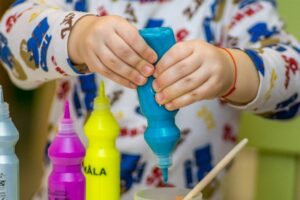
Finger painting
The first touch of paint on their hands usually makes toddlers giggle, and then the real fun begins. Finger painting lets them smear, swirl, and create without needing brushes or tools. It’s messy, but that mess is where the learning happens—every stroke builds hand control and creativity. Use washable paints on thick paper or even cardboard, so it holds up to all the smudging. Some kids make dots, others spread it everywhere—both are perfect. You can even tape the paper down to keep it from sliding. It’s colorful, chaotic, and one of the best ways to let toddlers explore with their hands.
Dot marker art
Give a toddler a dot marker and watch the page fill up fast. The big handles are easy to grip, so even little hands can press and stamp without trouble. Each dot builds hand strength and control while also introducing colors and patterns. Start with plain paper, or use printable dot sheets to guide them. Some kids go wild and cover the whole page, others make neat rows—and both ways work fine. It’s low-mess compared to paint, but still gives them that colorful, creative playtime.
Sticker peeling and sticking
Kids never get tired of stickers, and this time it’s all about placing them. Once peeled, sticking them down builds accuracy and coordination. Give them a notebook, paper, or even a cardboard box to decorate. Large stickers are great for beginners, while smaller ones challenge their fingers more. Toddlers enjoy deciding where each sticker goes, and that sense of choice keeps them engaged. It’s simple, cheap, and keeps little hands busy while quietly working those fine motor muscles.
Crayon scribbling and tracing
There’s something special about the first scribbles on paper. Hand a toddler chunky crayons, and they’ll go to town making lines, swirls, or even random dots. That grip—whether it’s a fist or a clumsy pinch—is the start of writing skills. Over time, you can guide them with simple tracing sheets or big shapes to follow. Colors make it exciting, and the more they practice, the stronger their hands get. It’s a fun way to mix creativity with skill-building, and kids love showing off their artwork.
Using a paintbrush or sponge
Switching from fingers to a brush or sponge gives toddlers a whole new way to explore. Holding a brush builds grip and control, while dabbing or stroking teaches direction and pressure. Use washable paints and thick paper so they can press as hard as they want. Some kids love swiping long strokes, others just dab in one spot—it all counts. You can even cut sponges into shapes for stamping. It’s messy in the best way, and the variety keeps painting exciting.
Chunky wooden puzzles
Chunky puzzles are perfect for toddlers because the big pieces are easy to grab and hard to lose. Each lift, turn, and fit works on hand strength, grip, and problem-solving skills. The thick wooden pieces also stand upright, so kids can use them like toys, not just puzzle parts. Start with simple puzzles—maybe animals or shapes—so toddlers see quick success. As they get more confident, you can introduce puzzles with more pieces or trickier fits. Some toddlers place pieces carefully, others jam them until they fit, but either way they’re learning. The best part is how proud they look when the whole picture comes together.
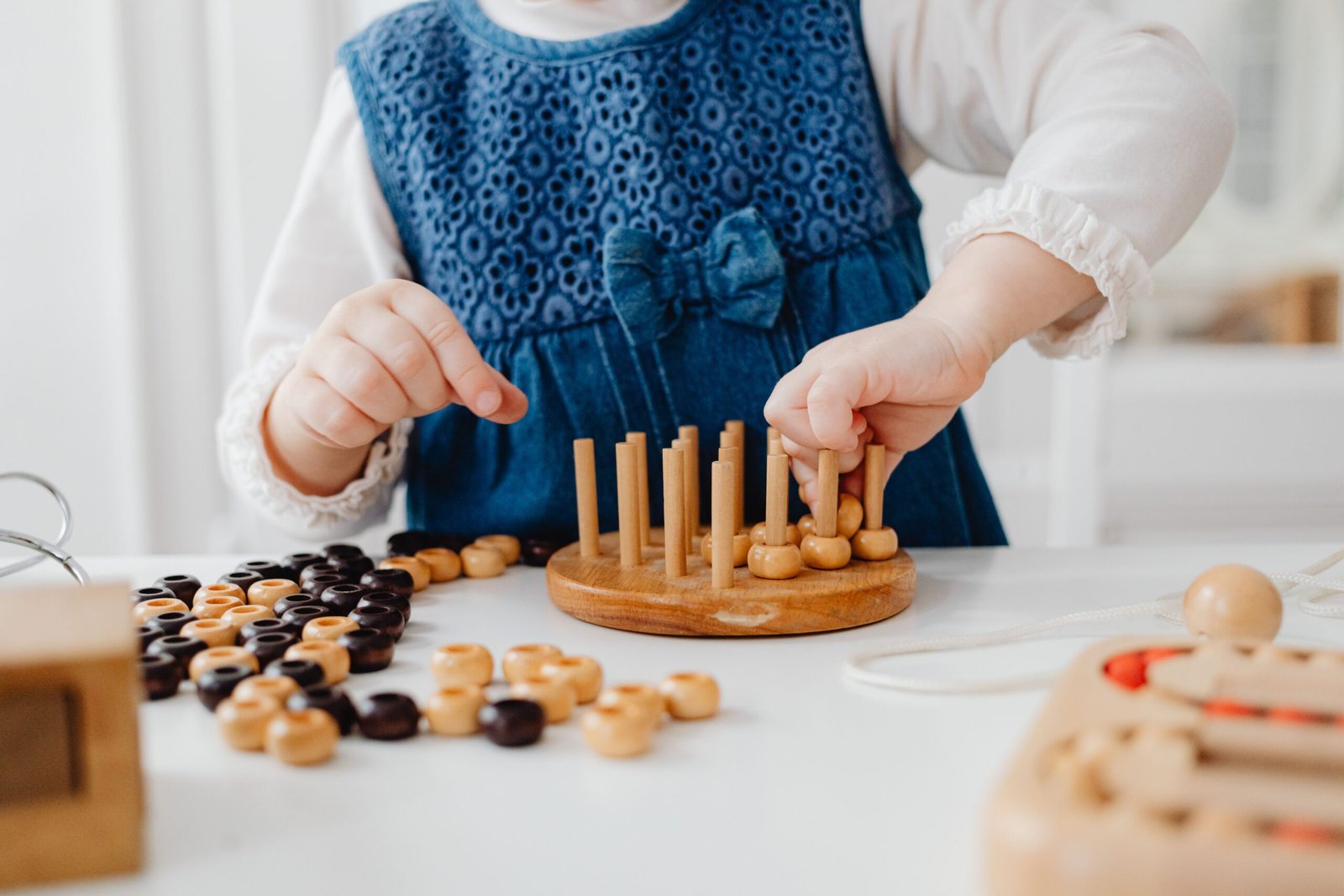
Large pegboards
Large pegboards make a great fine motor workout for toddlers because the pegs are easy to hold but still require effort to place. Pushing a peg into the hole builds hand strength, coordination, and focus. Pulling them out works those same little muscles in reverse. Toddlers can make patterns, stack colors, or just fill every hole—it doesn’t matter, the practice is in the action. Start with chunky pegs that fit loosely, then move to tighter boards as their control improves. Some kids will sit and work quietly for long stretches, which is rare at that age. Pegboards also grow with them, turning into early pattern or counting games later.
Nesting cups or stacking blocks
Stacking cups or blocks might look simple, but toddlers see it as a big challenge. Balancing one on top of another takes focus, grip, and steady hands. Sometimes towers crash fast, sometimes they stand tall—either way, toddlers laugh and try again. Nesting cups add another layer since they fit inside each other, teaching size and order. You don’t need fancy sets; even plastic cups from the kitchen work. It’s one of those activities that never gets old because building and knocking down is just too fun.
LEGO Duplo or Mega Bloks
Big blocks are a toddler’s dream—they’re easy to grab and hard to swallow, so parents can relax. Snapping pieces together builds grip strength and control, while pulling them apart works finger muscles. Some kids build towers, others just connect and disconnect over and over, and both ways teach fine motor skills. The bright colors and chunky shapes keep them engaged for a long time. It’s playtime that secretly trains their little hands for bigger skills later on.
Shape sorters
Shape sorters are a classic toddler toy for a reason—they mix fun with skill-building. At first, toddlers might try to jam a triangle into a circle hole, but that’s part of the learning. Each attempt helps with hand-eye coordination, patience, and grip control. Start with simple shapes like squares or circles, then gradually introduce harder ones like stars and hexagons. The satisfying “clunk” when a piece fits makes them want to keep trying. It’s also a great way to introduce colors and shape names while they play. Shape sorters give toddlers a small challenge with a big reward, and that mix keeps them coming back again and again.
Using a fork or spoon
Mealtime can be messy, but it’s also one of the best times for toddlers to practice fine motor skills. Using a fork or spoon helps them build control, grip strength, and hand coordination. At first, most food will end up everywhere except their mouth, and that’s okay—it’s the process that matters. Start with easy foods like mashed potatoes, yogurt, or soft fruit that’s simple to scoop or stab. Each successful bite builds confidence and independence. Toddlers also love copying adults, so giving them their own utensils makes them feel proud. Over time, the spills get fewer, the bites get steadier, and mealtime turns into skill-building practice.
Peeling a banana or a clementine
Letting toddlers peel their own fruit is a small step toward independence, but it works big on fine motor skills. Bananas are the best place to start since the peel is soft and easy to grip. Once they’re confident, try clementines, which need more finger strength and patience. Toddlers enjoy the challenge because the reward—tasty fruit—is waiting right inside. Peeling also teaches sequencing, since they learn to pull one piece after another until it’s done. Sure, the peel might tear or take forever, but that’s part of the fun. It’s simple, practical, and gives toddlers a sense of pride while practicing important hand movements.
Pouring water into a cup
Pouring water might seem simple, but for toddlers it’s full of learning. Hand them a small cup or pitcher and let them tip water into another container. The act of controlling the pour builds hand strength, coordination, and focus. At first, some spills are inevitable, and that’s totally fine—it’s all part of practice. Start with small amounts of water in a sink or on a tray so cleanup is easy. You can even add food coloring or floating toys to make it more exciting. Toddlers feel proud when they manage a full cup without spilling, and each attempt quietly improves their fine motor skills.
Opening snack containers
Toddlers are curious about containers, and snack time is the perfect chance to let them practice. Give them a few safe containers with twist lids, snap tops, or pull tabs, and watch them work. Twisting, pulling, and pressing builds grip strength and hand coordination in a real, useful way. You can make it extra motivating by hiding small snacks inside, so each success feels like a little win. Some kids open them quickly, others need more tries, but both are learning persistence. It’s practical skill-building disguised as fun, and toddlers love the independence that comes with opening something “all by myself.”
Spreading butter or jam with a toddler-safe knife
Handing toddlers a kid-safe knife and letting them spread butter or jam is a simple way to build fine motor skills. At first, they’ll push too hard or scrape unevenly, but each try teaches pressure and hand control. Soft foods like butter, cream cheese, or jam make it easier to practice. It also gives them a sense of independence—toddlers love being part of mealtime tasks. Start with toast or crackers so they see quick results. Yes, it’s messy, but that’s part of the process. They’ll improve with practice, and it’s rewarding to watch them prepare their own snack while strengthening those little hand muscles.
Threading beads onto pipe cleaners
Threading beads looks like play, but it’s serious fine motor practice. Pipe cleaners are perfect because they’re stiff and hold beads steady for tiny hands. Start with chunky beads to make the task easier, then introduce smaller ones for a challenge. Toddlers practice pinching, gripping, and focusing while sliding each bead down. They’ll create simple “bracelets” or patterns, and the process keeps them engaged. The best part is that it’s open-ended—there’s no right or wrong way to do it. Beads and pipe cleaners are cheap, easy to set up, and can be packed away for reuse. It’s creative, fun, and strengthens coordination in a big way.
Lacing cards or shoelaces
Toddlers enjoy the challenge of poking a lace through holes, and lacing cards make it simple. The action requires focus, grip, and hand-eye coordination, all wrapped up in a fun game. You can buy lacing cards with shapes or animals, or make your own using cardboard and a hole punch. Thick shoelaces work best for little fingers since they’re easier to hold and guide. Some kids will lace randomly, others will follow the holes in order—it all builds skill. The repetition of threading in and out is calming for many toddlers. Plus, it’s a great quiet-time activity that still works those tiny muscles.
Velcro matching boards
Velcro boards are simple, but toddlers love the ripping sound as much as the matching. You can make one with felt, Velcro dots, and cutout shapes or buy a ready-made version. The task is to match the right piece to its spot, press it down, then peel it off again. Pressing builds finger strength, and peeling works the grip in reverse. Matching shapes or pictures also adds a cognitive layer to the play. Toddlers get excited because it feels like a puzzle and a game all at once. It’s reusable, mess-free, and great for fine motor practice without needing a lot of setup.
Clothespin clipping games
Clipping clothespins might look too simple, but for toddlers it’s a real workout for little fingers. Squeezing the pins builds strength in the same muscles they’ll use for writing later. You can clip them to the edge of a bowl, a cardboard box, or even a paper plate. Some parents make color-matching games by painting clothespins and targets, but plain ones work just as well. At first, toddlers may struggle with the squeeze, but soon they’ll clip one after another. The best part is how portable this activity is—you can toss a few clothespins in a bag and set it up anywhere.
Sorting buttons or small toys by color
Sorting games are simple, but toddlers find them surprisingly fun. Give them a pile of buttons, blocks, or small toys in different colors, plus a few bowls or muffin tin cups. The task is to place each piece into the right spot—red with red, blue with blue. It looks like play, but it’s sharpening their hand-eye coordination and grip while also teaching early math skills like grouping. Some toddlers will sort carefully, others will mix them up, and both are learning. You can adjust difficulty by adding more colors or different sizes. It’s low-cost, quick to set up, and keeps little ones focused longer than you’d expect.
Rolling a ball and catching
Something as simple as rolling a ball back and forth builds more than coordination. When toddlers push the ball, they’re practicing control; when they try to catch, they work on timing, grip, and focus. Start with a soft, lightweight ball that’s easy to grab. Sit close so they succeed often, then slowly add distance as they improve. Some toddlers laugh more at the chase than the catch, but that’s fine—it’s all skill practice. This game also helps with social play since it requires taking turns. It’s active, fun, and sneaks in fine motor practice while burning off energy at the same time.
Hammering toy pegs into a bench
Toy hammer benches are a toddler favorite because they make noise and feel like “real work.” Using a small mallet to hit the pegs builds grip, wrist strength, and hand-eye coordination. At first, toddlers may miss or hit too hard, but every swing improves their control. You can rotate the bench so new pegs pop up, keeping it exciting. Some kids love hammering nonstop, others take a slower approach—both ways work. The repetitive motion is calming and gives them a clear goal. It’s also safer than you’d think since toy mallets are lightweight. This classic activity makes toddlers feel capable while secretly training their fine motor skills.
Pro Tips for Parents & Teachers
- Follow your toddler’s lead — keep it fun!
- Repeat activities regularly to build skill
- Encourage both hands (bilateral coordination)
- Don’t rush fine motor milestones—support them with open-ended play
Conclusion
So go ahead and start building those skills one playful moment at a time. With activities like scooping, stacking, threading, and painting, your toddler will be learning and growing without even realizing it.
You’ll encourage creativity, boost coordination, and set the stage for essential milestones — all while having fun together.
Now grab those supplies and get ready for hands-on learning your toddler will love!